
Home / Articles / Casing Head vs. Tubing Head: Functions and Differences
WELLHEAD · TECHNICAL GUIDE
Casing Head vs. Tubing Head: Functions and Differences
Casing heads and tubing heads are related wellhead components, but they support different tubular strings and interfaces. Their selection must follow the approved well design and equipment stack-up.
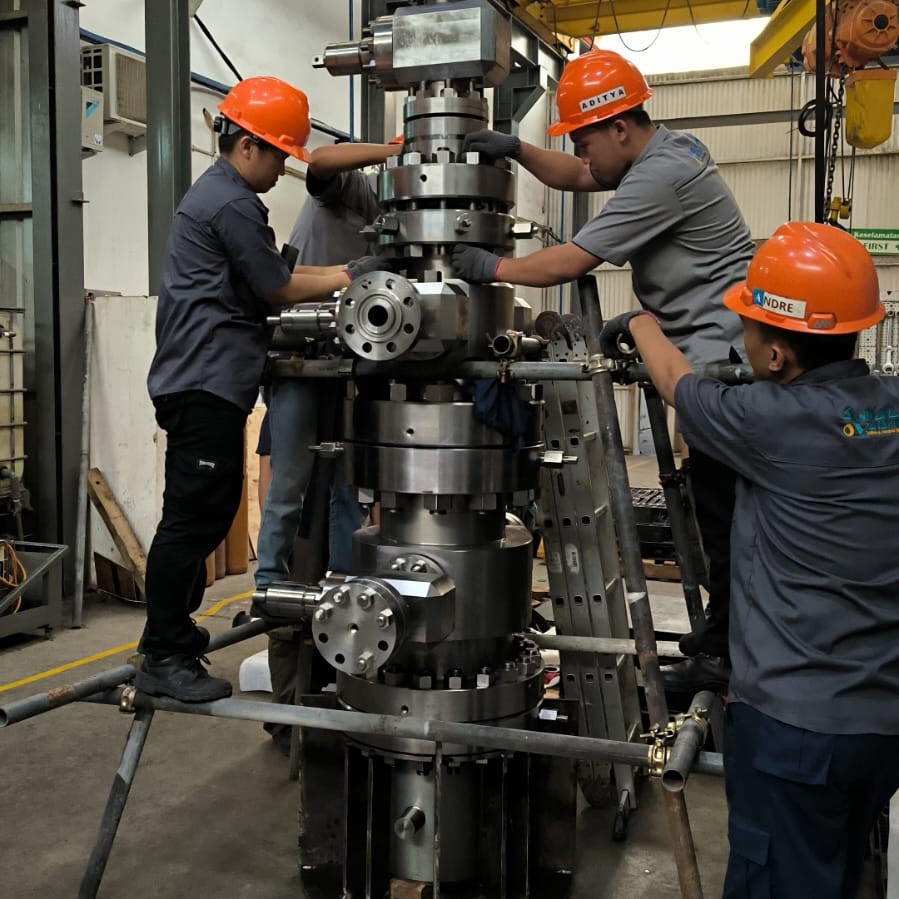
1. What is a casing head?
A casing head provides a connection and support interface for a casing string and associated wellhead equipment. It is part of the pressure-containing and structural arrangement at the top of the well. The exact design depends on casing dimensions, loads, connection type, hanger arrangement, sealing system and required pressure rating.
2. What is a tubing head?
A tubing head typically supports and seals the production tubing hanger and provides an interface for equipment installed above it, such as a tubing-head adapter or Christmas tree. Its bore, hanger profile, seals and upper connection must match the completion design and the equipment stack.
3. Key differences
The casing head is associated with casing support and the casing program; the tubing head is associated with production tubing support and the completion interface. Their roles are related but not interchangeable. Some wellhead systems use multiple casing spools or other arrangements, so terminology and component boundaries should be checked against the supplier’s drawings.
4. What determines the specification?
Confirm casing and tubing sizes and weights, hanger type, connection dimensions, design pressure and temperature, material and temperature classes, fluid and sour-service conditions, sealing requirements, applicable API 6A requirements, PSL, testing and documentation. Ratings and qualification scope must be confirmed for the exact model and configuration, not inferred from a brochure image.
5. Coordinate the full wellhead stack
A wellhead assembly is a system of mating interfaces. Check flange or connector compatibility, bore dimensions, seal types, load capacity, clearance, overall height and access for installation or maintenance. Any change to one component may affect adjacent equipment, so review the approved schematic and stack-up drawing as a coordinated package.
6. Conclusion
Casing heads and tubing heads serve different functions within the wellhead system. Correct procurement depends on the well program, interface dimensions, pressure-containing design, materials and project-specific qualification requirements. Confirm details against current manufacturer drawings and engineering approval.
Discuss your application with WNP
Share your technical specification with WNP to discuss the required product configuration and request current manufacturer documentation.
Technical note: Technical note: This article is introductory and is not a substitute for a process hazard assessment, approved project specification or current manufacturer documentation. Confirm all ratings, materials, standards and product-specific claims for the exact configuration.