
Home / Articles / Trunnion-Mounted Ball Valves: Design, Features and Applications
INDUSTRIAL VALVES · TECHNICAL GUIDE
Trunnion-Mounted Ball Valves: Design, Features and Applications
Ball valves are widely used for isolation, but their internal support arrangements affect how loads are managed and how the valve is specified. This overview introduces trunnion-mounted designs without assuming a particular model is suitable for every service.
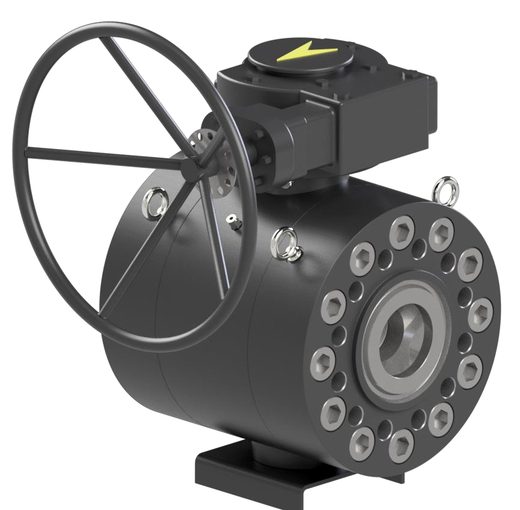
1. What makes a ball valve trunnion-mounted?
In a trunnion-mounted design, the ball is supported by mechanical trunnions, while the seat arrangement moves or energises against the ball according to the design. This differs from a typical floating-ball design, where pressure-induced ball movement contributes to seat loading. Exact construction varies by manufacturer and product series.
2. Typical applications and potential benefits
Trunnion-mounted valves are often considered for larger sizes and higher-pressure duties, where the support arrangement can help manage operating torque and ball movement. The suitability of any valve still depends on differential pressure, flow conditions, media, temperature, leakage requirements, operating frequency and the manufacturer’s design limits. Do not infer a rating from the valve architecture alone.
3. Seats, sealing and cavity considerations
Seat design, soft or metal sealing materials, body cavity relief, fire-safe features and double-piston or other seat effects are product-specific. These details influence isolation performance and how pressure trapped in the body cavity is managed. Confirm the manufacturer’s terminology and test evidence for the exact configuration rather than treating similar labels as equivalent.
4. Materials and operating conditions
Review body and trim materials, seat and seal compatibility, corrosion and erosion risks, temperature range, fluid composition, solids, pressure cycling and any sour-service requirements. Actuation may be manual, pneumatic, electric or hydraulic depending on torque, control philosophy and site requirements. Required accessories and fail position should be defined in the enquiry.
5. What to include in a valve enquiry
Provide nominal size, pressure class or design pressure, end connections, body and trim materials, seat/seal materials, operating and design temperatures, media, required leakage or test criteria, applicable standard, operation frequency, actuator details and inspection/documentation requirements. If a standard such as API 6D or ASME B16.34 is specified, confirm the applicable edition and scope with the project specification and manufacturer.
6. Conclusion
A trunnion-mounted ball valve is not selected by design name alone. Match the complete valve configuration to the process conditions, isolation duty, materials, actuation and project standards, and verify the current datasheet and qualification documents before purchase.
Discuss your application with WNP
Share your technical specification with WNP to discuss the required product configuration and request current manufacturer documentation.
Technical note: Technical note: This article is introductory and is not a substitute for a process hazard assessment, approved project specification or current manufacturer documentation. Confirm all ratings, materials, standards and product-specific claims for the exact configuration.