
Home / Articles / Wellhead Equipment
WELLHEAD · TECHNICAL GUIDE
Understanding Wellhead and Christmas Tree Equipment in Oil & Gas Operations
An introductory guide for project, procurement and maintenance teams reviewing wellhead and Christmas tree equipment for oil and gas applications.
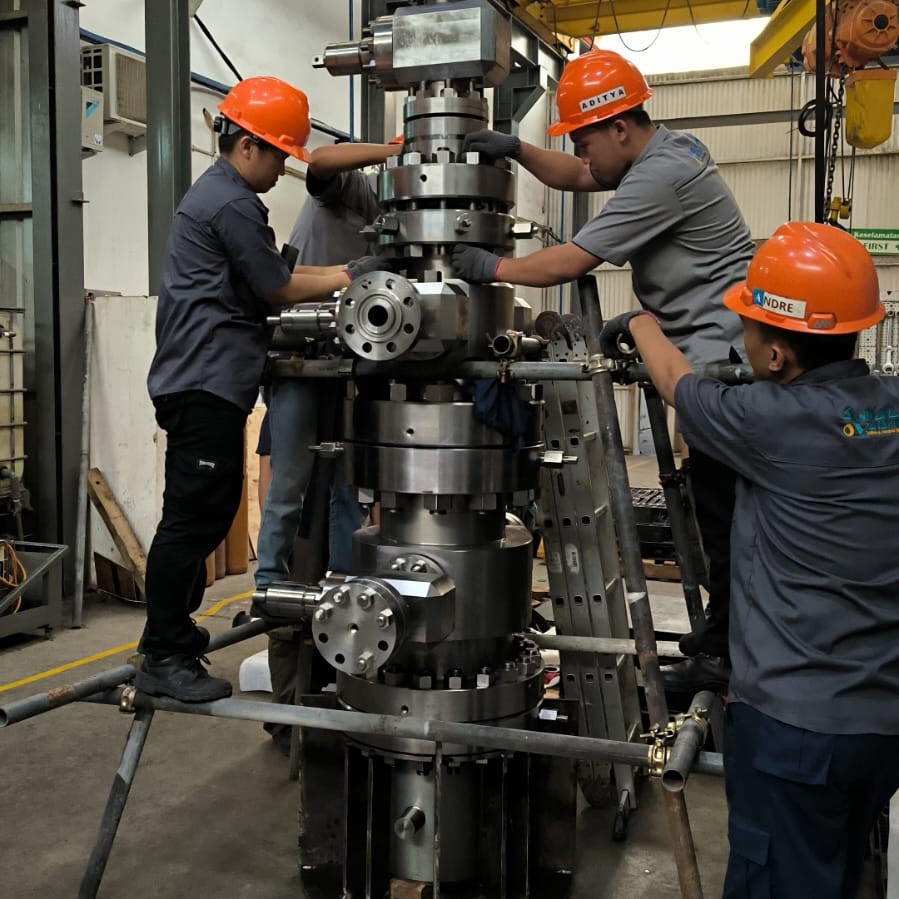
A wellhead is the pressure-containing equipment installed at the surface of an oil or gas well. It supports and seals casing and tubing strings and provides interfaces for pressure control equipment. A Christmas tree is installed above the wellhead to control and monitor produced or injected fluids during well operations.
The exact arrangement depends on the well design, drilling and completion program, pressure and temperature envelope, fluid composition, and operating philosophy. The following overview is intended to help project teams understand common equipment functions and prepare a better technical enquiry.
1. What does a wellhead do?
The wellhead provides structural support and pressure-containing interfaces for the well’s casing and tubing. Its components help suspend tubular strings, maintain seals between pressure zones, and provide connections for subsequent equipment. The design must match the well program and applicable specifications.
2. Common wellhead components
Casing head
A casing head provides a connection and support interface for casing strings and associated wellhead equipment. Its selection depends on casing dimensions, loads, connection details and the required pressure-containing arrangement.
Tubing head
A tubing head supports and seals the production tubing hanger and provides an interface for the equipment installed above it. The design must be compatible with the tubing program, seals and pressure requirements.
Hangers, spools and adapters
These components connect and support tubulars or transition between equipment interfaces. Dimensions, load capacity, sealing arrangement and connection standards need to be confirmed against the approved wellhead schematic.
3. What is a Christmas tree?
A Christmas tree is an assembly of valves, fittings and associated components installed on the wellhead to control access to the well and manage flow. The arrangement can include master valves, wing valves, a swab valve and a choke, depending on the design and application. Not every tree uses the same configuration.
The tree is selected as part of the overall well pressure-control system. The intended operating modes, emergency shutdown philosophy, intervention needs, fluid characteristics and required interfaces should be documented before equipment is specified.
4. The role of valves
Valves within wellhead and Christmas tree assemblies have distinct functions. Gate valves are commonly used for isolation; choke valves regulate flow and help manage pressure drop; needle valves may be used for smaller-bore control or instrument-related duties where specified. The correct type and configuration must follow the approved design—not a general assumption that the components are interchangeable.
5. Understand API 6A and pressure ratings
API Specification 6A is a commonly referenced specification for wellhead and Christmas tree equipment. A project specification may also define pressure rating, product specification level (PSL), material class, temperature class, performance requirements, connections, testing and documentation. These items must be checked together for the specific service.
The Andala Valvo brochure supplied for this article describes wellhead and Christmas tree equipment manufactured to API 6A and states ratings up to 15,000 psi, along with PSL and PR qualification information. These are manufacturer brochure statements, not a claim that every model or configuration is available at every rating. Confirm the current datasheet, certification scope and exact configuration with the manufacturer.
6. Consider the well's service conditions
Pressure and temperature are only part of the selection. The well fluid composition, potential sour-service conditions, corrosion mechanisms, external environment, loads, actuation requirements, maintenance access and lifecycle expectations may also affect material and configuration choices. Where hydrogen sulfide (H₂S) or other sour-service hazards are present, applicable material and design requirements must be confirmed for the actual conditions.
7. What to include in a technical enquiry
- Wellhead schematic and connection details.
- Required pressure rating and operating/design pressure and temperature.
- Casing and tubing sizes, weights, and hanger requirements.
- Fluid composition and any sour-service requirements.
- Applicable standard and required PSL, material and temperature classes.
- Valve arrangement, actuation, control and shutdown requirements.
- Testing, inspection, certification and documentation requirements.
- Project location, delivery schedule and maintenance considerations.
If some data is not available, identify it as pending. The manufacturer and project engineering team should confirm the equipment configuration against the approved design.
Conclusion
Wellhead and Christmas tree equipment form a coordinated pressure-control system. Correct selection depends on the well design, component interfaces, pressure and temperature envelope, fluid service, valve functions and project requirements. Avoid selecting equipment based on a pressure number or product image alone; verify the complete specification and current manufacturer documentation.
Need help with wellhead equipment?
Contact WNP to discuss your project specification and request manufacturer documentation for the required configuration.
Technical note: This article uses the supplied Andala Valvo brochure as a source for manufacturer-specific statements. Its stated ratings and qualifications must be verified against current manufacturer documentation for the exact model and configuration. This introductory article is not a substitute for project engineering, applicable standards or manufacturer confirmation.